Table of Content
FSSAI Guidelines for Probiotics and Prebiotics in India: Complete Compliance Guide

Learn about the FSSAI Probiotics guidelines India, including Regulatory requirements, approved strains, labeling rules, compliance obligations, and product approval requirements for Probiotics and Prebiotics.
The FSSAI Probiotics guidelines India provides a comprehensive framework for regulating Probiotic and Prebiotic products sold in the country. These guidelines ensure product safety, efficacy, quality, and accurate consumer information. Manufacturers must comply with specific requirements under the Food Safety and Standards Authority of India (FSSAI) regulations before introducing Probiotic or Prebiotic products into the market.
Understanding Probiotics and Prebiotics Under FSSAI Nutraceutical Regulations
Probiotics are live microorganisms that, when administered in adequate amounts, provide health benefits to the host. Common Probiotic strains include Lactobacillus and Bifidobacterium species.
Prebiotics are non-digestible food ingredients that selectively stimulate the growth and activity of beneficial microorganisms in the gut. They support digestive health and improve gut microbiota balance.
Under FSSAI Nutraceutical Regulations, Probiotics and Prebiotics may be regulated as health supplements, Nutraceutical products, standalone Probiotic/Prebiotic products, or under other categories defined in the regulations. Manufacturers must ensure compliance with prescribed safety and quality standards.
FSSAI Requirements for Probiotic Product Approval
Obtaining Probiotic product approval requires manufacturers to demonstrate product safety, strain of identity, and quality.
The microorganisms used in Probiotic products must belong to approved species and strains recognized by FSSAI. Scientific evidence supporting the claimed health benefits should also be maintained.
Manufacturers must ensure that Probiotic cultures remain viable throughout the declared shelf life of the product.
Table 1: Key Compliance Requirements for Probiotic Products
| Requirement | Description |
| Strain Identification | Accurate identification of Probiotic strains |
| Safety Assessment | Scientific evidence supporting safety |
| Viable Cell Count | Minimum effective count throughout shelf life |
| Label Compliance | Mandatory declaration of strains and CFU count |
| Quality Testing | Regular microbiological and stability testing |
Prebiotics Regulations India: Key Compliance Requirements
The Prebiotics regulations India framework requires manufacturers to use scientifically validated ingredients and ensure product safety.
Prebiotic ingredients should be supported by scientific evidence demonstrating their beneficial effect on gut health. Claims made on product labels must be submitted.
Manufacturers should maintain records of ingredient specifications, quality testing, and product formulations for regulatory review.
Probiotic Food Compliance and Labeling Requirements
Probiotic food compliance includes adherence to labeling provisions prescribed by FSSAI.
Labels should clearly mention:
- Name of Probiotic Strain
- Viable cell count (CFU)
- Recommended serving size
- Storage conditions
- Shelf life
- Usage instructions
Health claims must not be misleading or imply treatment, cure, or prevention of diseases.
Manufacturers should ensure that all declarations are scientifically supported and consistent with regulatory requirements.
Quality and Safety Standards for Probiotics and Prebiotics
Quality assurance is a critical aspect of compliance.
Manufacturers should conduct:
- Microbiological testing
- Stability studies
- Shelf-life validation
- Contaminant analysis
- Quality control assessments
These evaluations help ensure product safety and effectiveness throughout the product lifecycle.

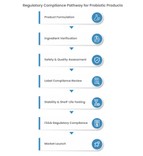
Figure 1
Common Challenges in Probiotic Product Compliance
Manufacturers often face challenges in maintaining viable Probiotic counts throughout product shelf life.
Another common issue involves unsupported health claims that may not meet regulatory expectations.
Proper strain identification, scientific substantiation, and robust quality systems help organizations overcome these challenges effectively.
Conclusion
The FSSAI Probiotics guidelines India establishes essential requirements for ensuring the safety, quality, and effectiveness of Probiotic and Prebiotic products. By complying with Prebiotics regulations India, maintaining Probiotic Food Compliance, adhering to FSSAI Nutraceutical Regulations, and following the prescribed Probiotic product approval requirements, manufacturers can successfully market compliant products while protecting consumer health.
Summary of Key Points
- FSSAI regulates Probiotics and Prebiotics under FSS Nutra 2022 regulation.
- Approved Probiotic strains must be scientifically identified and validated.
- Product safety, quality, and efficacy must be demonstrated through appropriate studies.
- Labels must clearly declare strains, CFU count, storage conditions, and usage instructions.
- Health claims should be scientifically substantiated and non-misleading.
- Quality testing and shelf-life validation are essential compliance requirements.
- Proper documentation supports regulatory inspections and product approval.
- Following the FSSAI Probiotics guidelines India helps manufacturers achieve regulatory compliance and consumer trust.
Enquire Now
To enquire about our services please complete the form below and we will be in tough with you as soon as possible

Food Regulatory Services
- Consumer Product
- Compliance Services
- Licenses